Built for my business. Now for yours.
I built the software that runs my ₹24 Cr business. Now I build it for yours.
UdyamEdge.ai is a bespoke consultancy that designs and builds custom operational software and AI for Indian SMEs. Not a framework borrowed from a classroom — production systems I architected and shipped to solve my own company's real problems, first.

Puneet Saraf — Managing Director, Rangoli Furnishings Private Limited. Towel and bathrobe manufacturer-exporter; factory at Kundli, office in Delhi. Four production systems built, shipped and running the business daily.
Written, shipped and maintained by one person, alongside running the business they serve.
Four systems. All built by me. All running.
Every consultancy claims capability. This is the difference between a claim and a fact you can watch working.
Which of these sounds like your week?
Every one of these was my problem before it was a system. Pick the one that stings and I'll show you what I built for it.
I don't actually know what a product costs me — not properly, not per SKU.See it in Rangoli Ops →
My purchase orders and job work live in a diary and three WhatsApp groups.See it in Rangoli Ops →
The marketplace settlement never matches what I think I sold.See it in Rangoli Ops →
Payroll takes days, and I still worry about the statutory filings.See it in Rangoli HR →
I can't tell where an order actually is without asking four people.See it in Rangoli Ops →
Nobody knows what anyone else is working on until something is already late.See it in Rangoli To-Do →
“How has one man running a towel factory built all this?”
Because I wasn't trying to build software. I was trying to fix my business.
Every one of these systems started as a problem that was costing me money or sleep — payroll that took days, orders reconciled by hand, work tracked in WhatsApp messages. I couldn't find anything off the shelf that fitted how we actually work, so I built what we needed. That is a different motivation from a vendor building to a spec, and it shows in the result.
It also means I stop when the problem is solved. I'm not selling you a platform, a licence, or a five-year roadmap. If your answer is a spreadsheet done properly, I'll tell you that.
This is the business the software runs.
Not a case study I read about. The factory I walk into, with the problems I built the systems to solve.


Swipe for the rest of the floor →
Start with an audit. Build only what earns its place.
Off-the-shelf where it fits. Built from scratch where it doesn't. And I'll tell you honestly which is which.
Accounting is accounting. If Tally or Zoho already does the job, I'll say so rather than quote you for it. What I build is the part no product can model — how your business actually runs.Most engagements begin the same way — I look at how your business actually runs before anyone writes a line of code.
Business process audit
A deep dive across sales, operations, finance and customer management to find where manual, repetitive work is costing you time — and where automation actually pays off. Scoped, fixed, and useful even if you never hire me again.
Custom SME software
End-to-end design and build of operational software shaped around how your business actually runs — HR, operations, inventory, order-to-delivery, dashboards. Role-based access, audit trails and India compliance from commit one.
Custom AI implementation
AI embedded in real business context — automations, intelligent dashboards, document and data workflows. Practical systems that do daily work, not experiments that impress in a demo and die in production.
Strategic advisory
Retainer-based problem-solving with someone who has run a real manufacturing and export business — a thinking partner who can pressure-test decisions rather than theorise about them from outside.
Your other options — honestly.
I'm not the right answer for everything. Here's how I actually compare.
| Off-the-shelf software | A software agency | Hiring in-house | UdyamEdge | |
|---|---|---|---|---|
| Fit to how you work | You bend your process to the product | Built to a spec you had to write yourself | Good, once they understand the business | Shaped around your actual workflow |
| Understands Indian SME reality | Rarely — GST, job work and export docs are afterthoughts | Varies enormously | Depends entirely on the hire | Lived daily for years |
| Has run a business like yours | No | Almost never | No | Yes — that's the whole point |
| Time to something usable | Fast, if it fits | Months, plus a discovery phase | Months to hire, then months more | Weeks, starting with an audit |
| Cost shape | Per user, forever | Large fixed project fee | Salary, forever, plus management | Scoped project or retainer |
| Honest about not being needed | No | No | — | I'll tell you to buy off-the-shelf when that's right |
Swipe the table to compare all four →
Who this is for — and who it isn't.
I take on a small number of engagements at a time, so it's worth being direct about this.
A good fit
- ₹5 Cr – ₹200 Cr turnover
- Consumer brands — textiles, apparel, home goods, FMCG, lifestyle
- Manufacturers, exporters, D2C brands, marketplace sellers
- Operations that have outgrown spreadsheets and generic tools
- Founders who have become the bottleneck in their own business
Not a fit
- Pre-revenue startups
- Founders unwilling to invest in proper systems
- Buyers shopping on price alone, with no commitment
- Anyone wanting the cheapest quick fix rather than something that lasts
What each system actually does.
The short version is above. This is the part a technical buyer — or a sceptical one — will want to read.
Rangoli HR
hr.rfpl.inRead the detail
Employee records, attendance, leave and payroll lived across spreadsheets and memory. Statutory filing was manual and error-prone, and nothing was auditable.
An HR platform delivered in disciplined milestones rather than one big bang. Live today: the foundation, hiring from Naukri intake through to promoting a candidate to employee, the employee master with self and manager onboarding, attendance and leave, and payroll — runs, overrides, advances, payment splits, plus a Tally ledger bridge and consultant reconciliation. Performance, policies and analytics are the milestones still ahead.
Compliance-grade HR running the company: every employee-data table under row-level security with an audit trigger from the moment it is created, and an audit log that is append-only at the database layer — updates and deletes revoked outright.
Rangoli Ops
ops.rfpl.inRead the detail
Order-to-delivery and inventory ran as two separate legacy systems. Everything around them — purchase orders, job work sent to processors, what a product actually costs, what the marketplace ads were doing — lived in spreadsheets, WhatsApp and people's heads.
One platform that swallowed all of it. Orders through to dispatch and payment. Stock ledger and daily consumption. Towel and material purchase orders with per-vendor numbering, plus job-work tracking. A bill-of-materials costing engine. Monthly sales reporting. An Amazon Sponsored-Products optimiser. Even a designer-facing creative studio.
Nine modules, one login, eight roles — each with its own landing page and sidebar. The whole operation visible in one place instead of reconciled by hand every week.
Rangoli To-Do
todo.rfpl.inRead the detail
Work was tracked in WhatsApp messages and heads. Nothing was assignable, nothing was visible across the team, and blockers surfaced far too late.
A multi-user task platform: private boards with a shared team layer, priority buckets with drag-and-drop, six statuses with intelligent auto-sort, notes with compressed image attachments, cross-user assignment, realtime sync, recurring tasks, CSV export and PWA install. Open-task reminder emails go out Monday, Wednesday and Friday at 09:30 — deliberately not daily, so they stay signal rather than noise.
Live and used daily. It also shows range — not every problem needs a heavy framework, and this one was built with no build step at all.
Wealth-App
wealth.rfpl.inRead the detail
A family's financial picture was scattered across brokers, statements and folders — and assembling anything the CA could use meant a week of manual work every year.
A platform that assembles the whole picture and produces a CA-ready data pack — holdings with equity and official eCAS import, insurance policies with premium reminders, vehicles, fixed assets, identity documents, and an attention list of what actually needs doing. Phased deliberately: the equity MVP shipped first, everything else followed.
Working and in use — and proof of judgement in the hardest data category there is. Consented rails only: broker API, Account Aggregator, official eCAS. No scraping of third-party apps, ever.
Deliberately scope-limited: it is not an advisory or PMS product and not a tax-filing tool. It organises the picture and hands a clean pack to the family's CA. The insurance module is record-keeping and premium reminders only — explicitly not insurance advice.
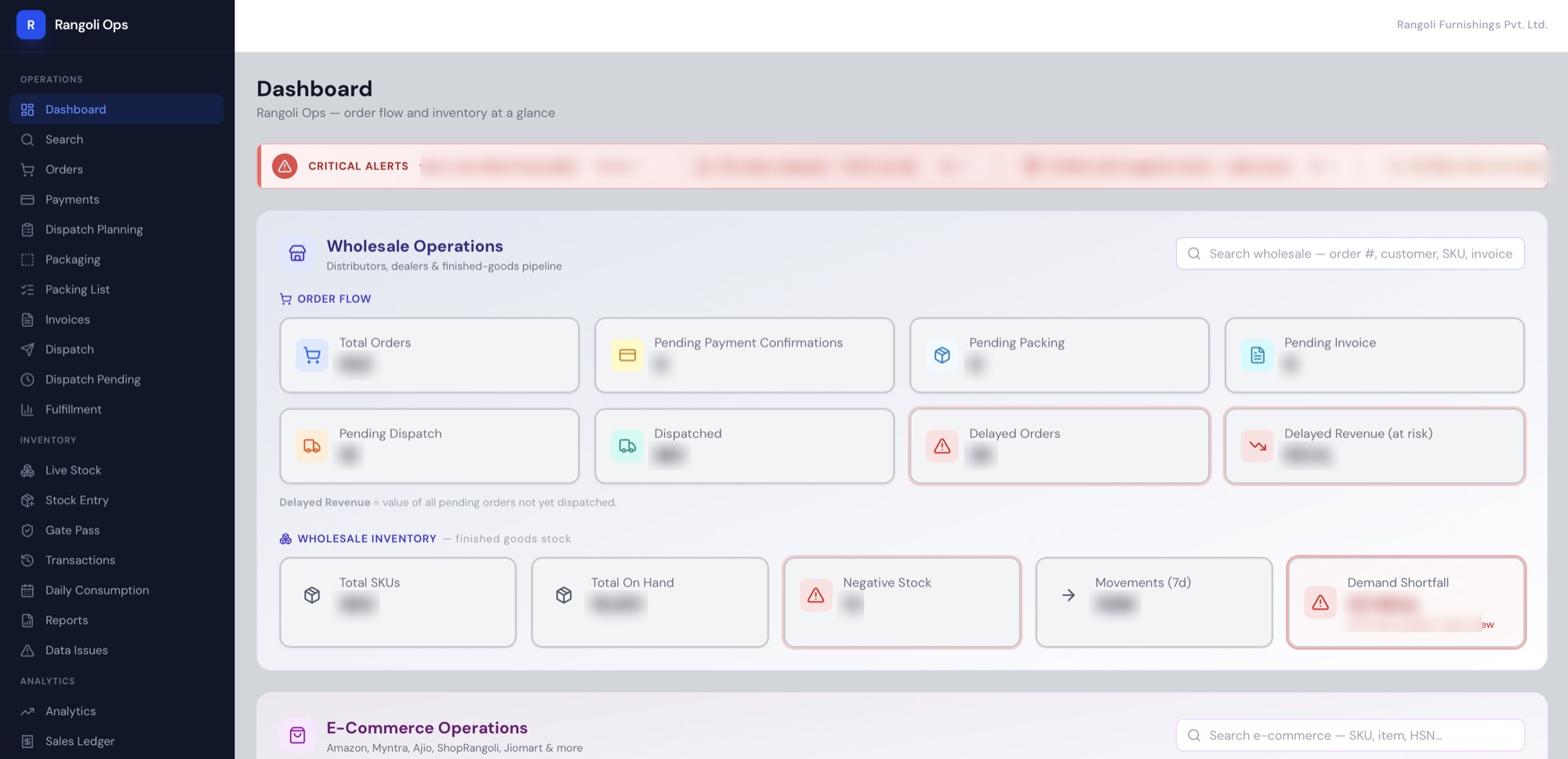
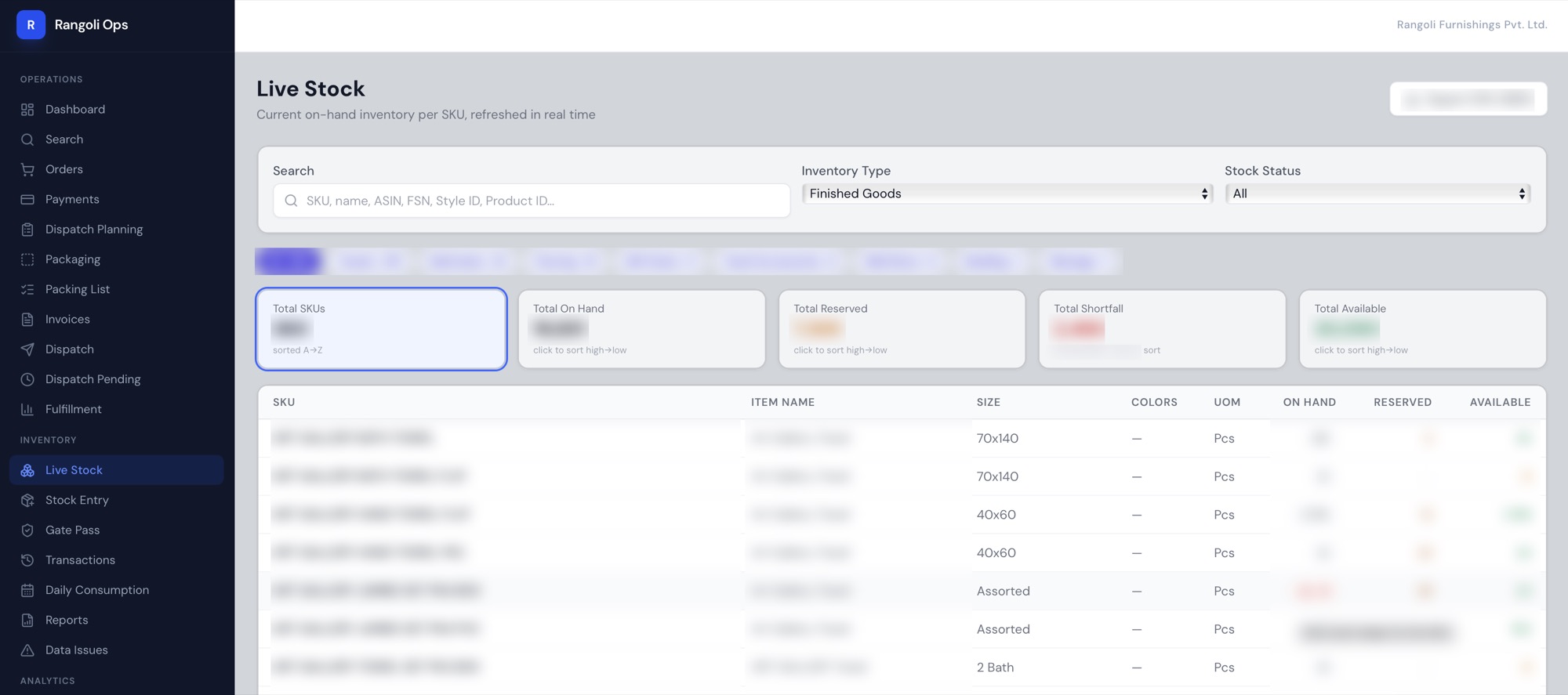
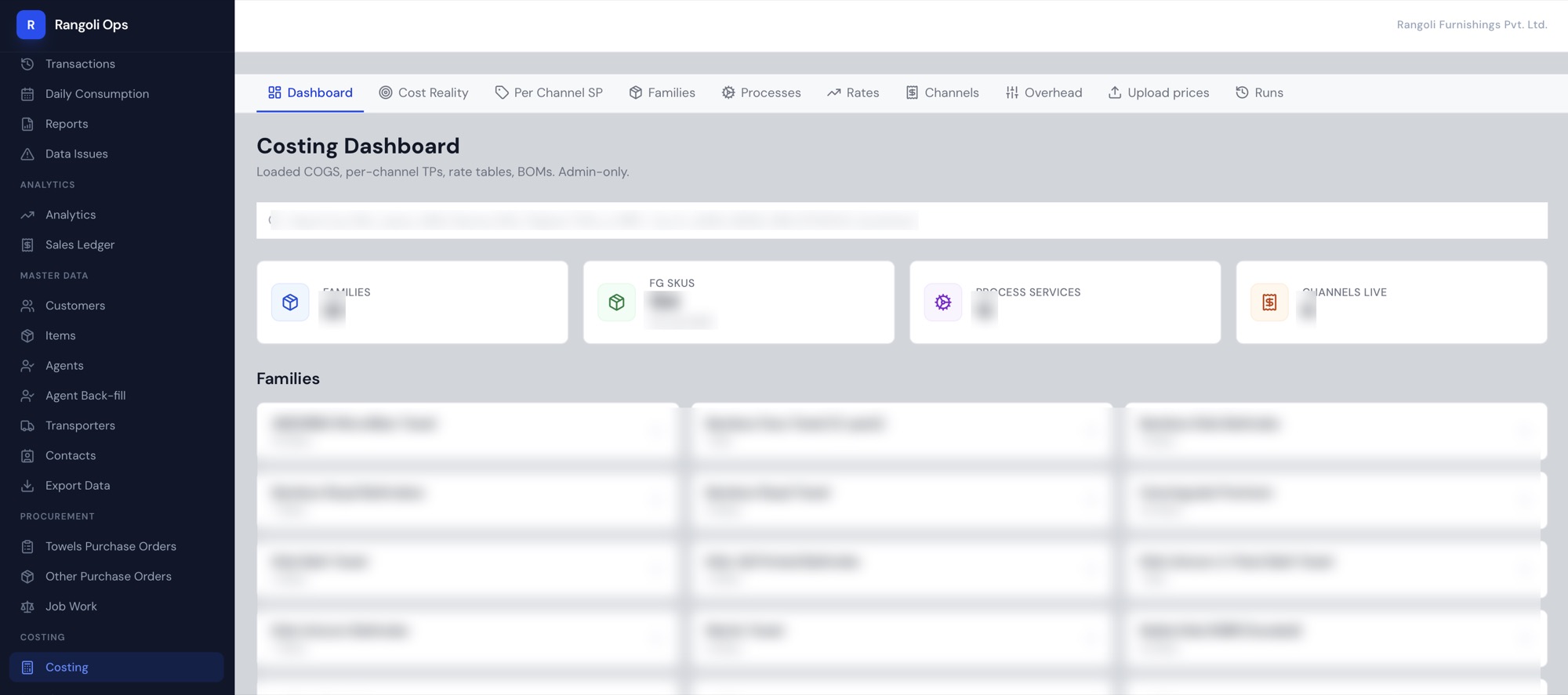
Not mockups. The systems as they ran today.
Anyone can show you a design. These are working screens from the live systems, captured on the date shown in them. Every figure, product name and quantity is blurred — what you are looking at is the structure, not my numbers.

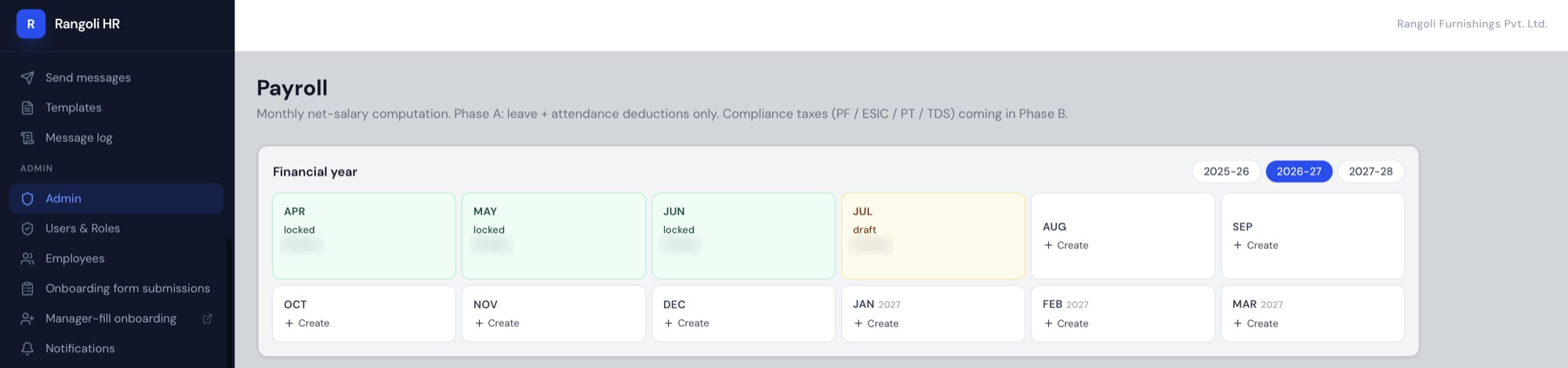
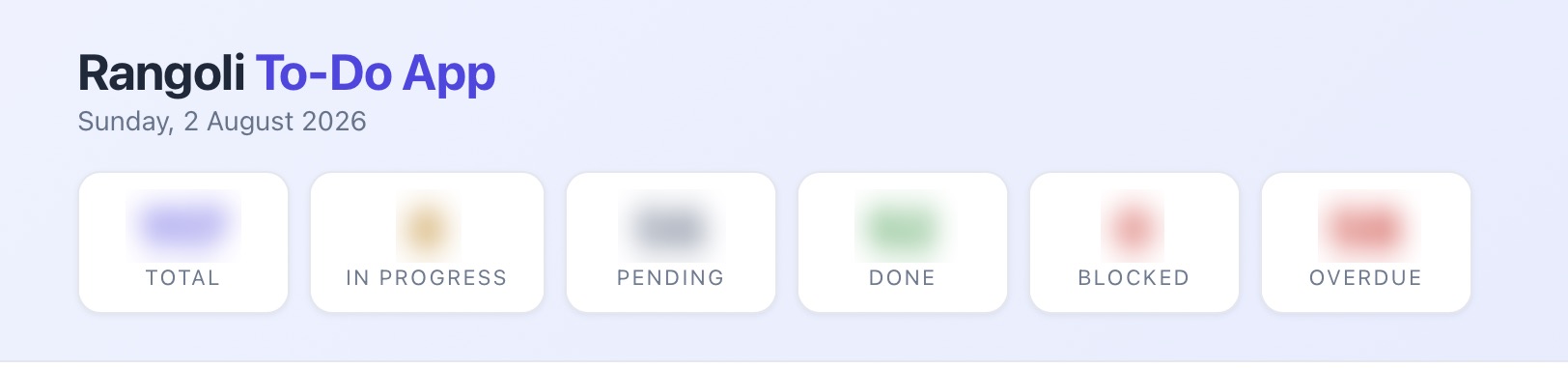
Beyond the blurring: you won't find a customer list, an employee record, a salary, or a rupee of family financial data anywhere on this page. Those screens exist and they work — the Wealth app is built almost entirely of them — but none of it belongs on a public website, so none of it is here. The same judgement will apply to your data.
How this actually goes.
Nobody signs a large build with someone they haven't worked with. So we don't start there.
A conversation
You tell me where the manual work is. I tell you honestly whether software is the answer — or whether it isn't. No deck, no pitch.
A process audit
Paid, scoped, fixed fee. You get a written map of where time is being lost and what automation would actually pay for itself. Useful even if you never hire me again.
The build
One system, scoped from what the audit found, shipped in milestones so something useful lands early rather than after six months of silence.
Retainer, if you want one
Ongoing advisory and iteration — for founders who'd rather have a technical partner in the business than a vendor they call in a crisis.
The things everyone asks.
What does this cost?
It depends entirely on what you need, which is why there's no price list here. An audit is a small, fixed, scoped piece of work. A build is scoped after the audit, once we both know what's actually required.
What I can promise is that you'll never get a proposal for something I don't think you need.
How long does it take?
An audit takes weeks, not months. A first working system usually follows in weeks after that — I ship in milestones so you see something real early, rather than waiting six months for a big reveal.
Why not just hire a developer in-house?
Sometimes you should, and I'll say so. But a developer needs someone to tell them what to build — and if that person is you, you've just added a job to your week rather than removed one.
The value here isn't writing code. It's knowing which problem is worth solving, because I've had the same problem.
You run a textile business. Is my data safe with you?
Fair question, and worth asking of anyone. I don't take on direct competitors of Rangoli Furnishings in the same product category and export markets. Beyond that, engagement data and anything built for you stays yours and is never reused elsewhere.
The systems above show how I handle sensitive data when it's my own family's — that's the standard I hold for clients too.
What about Odoo, SAP, or the other big platforms?
They're genuinely good, and for accounting or CRM I'd usually tell you to buy rather than pay me. What they can't do is model how you actually work — your job-work reconciliation, your export document set, your quality parameters.
That's the part that decides whether a system gets used or quietly abandoned. I build that part, and connect it to whatever you've already bought.
Can I see the software working?
Yes. Narrated walkthroughs of all four systems are being recorded on demonstration data. Until they're up, book a call and I'll take you through them live.
Start with a conversation about your operations.
No pitch deck. Tell me where the manual work is and where you've become the bottleneck, and I'll tell you honestly whether software is the answer — or whether it isn't.
I reply within one working day. If it's urgent, WhatsApp is faster than email.